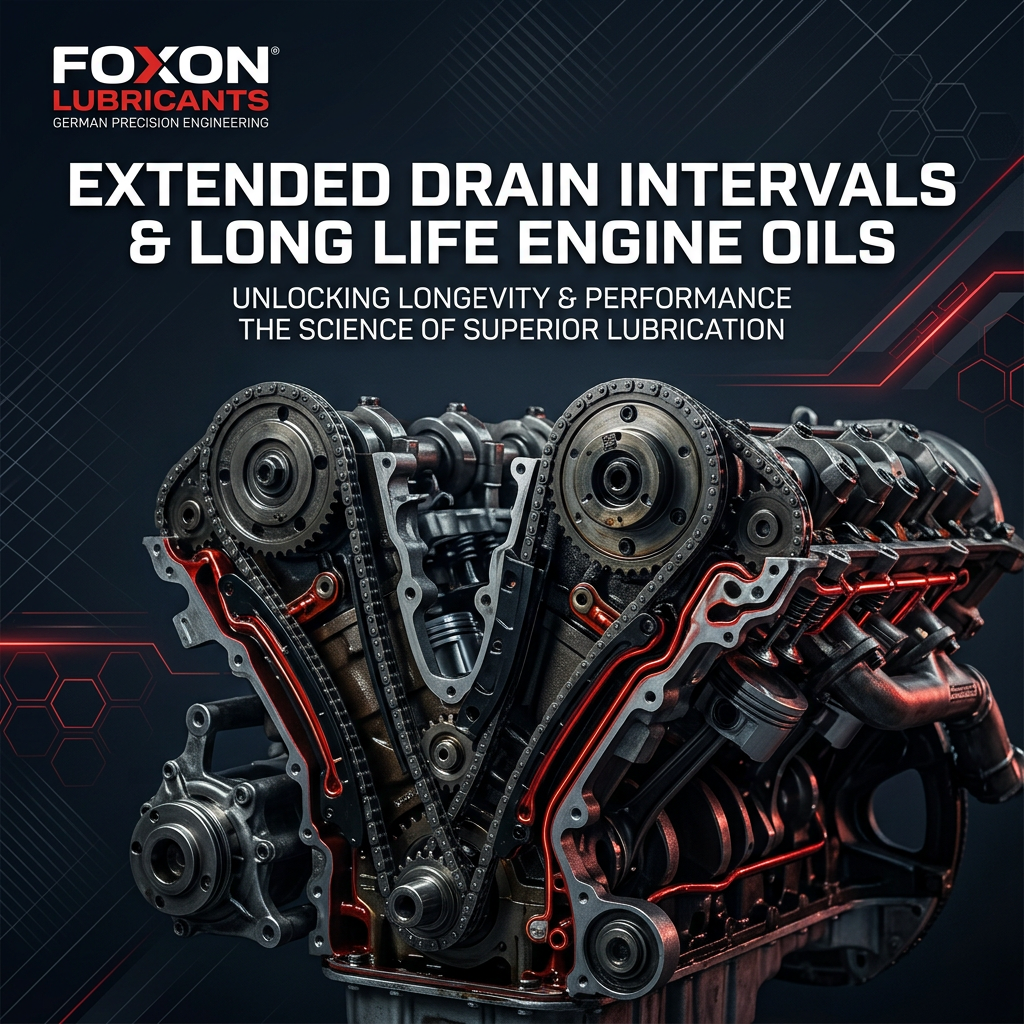

Can You Really Go 100,000 km Between Oil Changes? The Science of Extended Drain Intervals
Oil change intervals have been increasing steadily for decades. Some modern synthetic oils now claim 50,000 km or even 100,000 km service life. We examine the science — and tell you when extended drain claims are real.
—How Oil Degrades Over Time
Engine oil degrades through three primary mechanisms: thermal oxidation (heat breaking down molecular chains), additive depletion (anti-wear and detergent additives being consumed in service), and contamination (fuel dilution, soot, water ingress, combustion acids). Extended drain oils must resist all three mechanisms simultaneously. A 100,000 km claim requires exceptional oxidation stability, a large TBN (total base number) reserve to neutralise acids, and a robust dispersant package to handle soot loading in diesel engines.
—The Role of PAO Base Stocks
The fundamental reason PAO-based synthetics last longer than mineral or Group III oils is molecular uniformity. Mineral oil contains a wide range of hydrocarbon chain lengths — some volatile, some prone to oxidation. PAO molecules are synthesised to a specific chain length and branching pattern, giving them inherently superior oxidation resistance, lower volatility (Noack evaporation), and better low-temperature flow. FOXON DELMAX MASTER BOOST uses a PAO and ester blend base, which is why it can legitimately claim 100,000 km drain capability in heavy-duty diesel applications under the right conditions.
—What 'Under the Right Conditions' Actually Means
Extended drain intervals depend on operating conditions, not just oil quality. City driving with short trips is harder on oil than motorway cruising — the engine never fully warms up, causing fuel dilution and water condensation. Turbocharged engines, engines with EGR systems, and engines running on high-sulphur fuel all deplete oil additives faster. The 100,000 km claim for FOXON DELMAX MASTER BOOST applies to long-haul diesel trucks operating on low-sulphur diesel with functioning emission systems. For city fleets or high-sulphur fuel markets, a 30,000–50,000 km interval is more appropriate.
—Oil Analysis: The Only Way to Know for Sure
The professional approach to extended drain intervals is used oil analysis (UOA). A sample of in-service oil is sent to a laboratory, which measures viscosity, TBN, TAN, metals (copper, iron, lead, aluminium), oxidation, nitration, soot content, and water. The results tell you whether the oil still has service life remaining or whether it needs changing. Many fleet operators use UOA to optimise drain intervals — reducing unnecessary oil changes and avoiding premature oil failure simultaneously.
—FOXON's Recommendation
Use FOXON DELMAX MASTER BOOST in long-haul diesel applications for maximum drain interval performance. For passenger cars and light commercial vehicles, FOXON PRIMA ULTRA SQ and PURE TECH ULTRA SP provide excellent extended drain capability up to manufacturer-specified intervals. Never exceed drain intervals without oil analysis support, regardless of the oil brand or grade used.
FOXON Technical Team
German-Engineered Lubricants · www.foxonlube.de
Need Technical Advice?
Talk to Our Engineers
Our team can recommend the right FOXON product for your specific application and operating conditions.
Contact Us